|
|
Freemuse first annual State of Artistic Freedom report
|
|
|

|
29th March 2018
|
|
|
See article from cinestaan.com
|
A survey by Freemuse.org, an independent organisation advocating and defending artistic freedom, also mentions that India accounts for 1/3 of all documented cases of persecution and threats aimed at filmmakers and actors. The report reveals:
67% of all documented censorship cases in India were against films and filmmakers. Reported censorship violations included 55% by government authorities , eg CBFC, and 36% by religiouse and caste groups. In
2017, Bollywood filmmakers found themselves in major scuffles with censors and far-right caste groups. Throughout the year, they were confronted by frequent hurdles put in their way by censors demanding cuts to films deemed indecent or likely to offend
religious or ethnic sentiments. These challenges came amidst threats, and sometimes attacks by caste groups. The challenge of being creative in a multi-religious and culturally sensitive society was profound for Indian filmmakers
in 2017. Claims of preserving cultural values and preventing religious uprisings were used excessively by censors to justify violation of artistic freedom. This seemingly encouraged far right caste groups to take action towards stalling film releases,
threatening and attacking filmmakers in the course of the year. Although some censored films were eventuallycleared for screening, the sector's creativity was largely undermined.
|
|
|
|
|
|
|
|
27th March 2018
|
|
|
10 Completely Filthy Hidden Sex References in Disney Movies See article from cosmopolitan.com
|
|
|
Chinese censorship of The Shape of Water inspires a meme for recreating cinema scenes with the addition of little black dresses
|
|
|
|
|
17th March 2018
|
|
|
See article from supchina.com
|
The Shape of Water is a 2017 USA fantasy romance by Guillermo del Toro.
Starring Michael Stuhlbarg, Michael Shannon and Octavia Spencer.

|
|
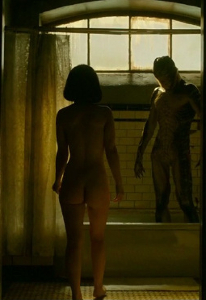
Uncut original
|
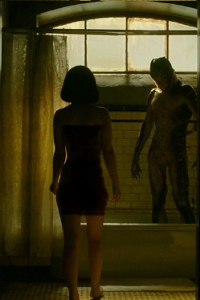
Censored Chinese version
|
Chinese audiences are used to censored, clean versions of Hollywood imports involving violence, nudity, sex scenes, or profanity. What Chinese moviegoers are allowed to see in theaters completely depends on the country's film censor, the State
Administration of Press, Publication, Radio, Film and Television of the People's Republic of China (SAPPRFT), which, in the recent release of 2017 Oscar winner The Shape of Water, altered scenes where actors are in states of undress by either adding
clothes or else pixellating out the offending details. According to a Weibo post by movie critic Feng Xiaoqiang CCC, in one scene of the Chinese revised version of the film, the female protagonist, Elisa, is covered in black shadows from her chest
to her thighs, whereas in the original, the actress is fully naked with her back facing the camera. That was my first time seeing this in a Chinese theater. I was stunned, Feng wrote. It almost looks like the actress is dressed in an all-black
one-piece swimsuit, and it fits her well. Some scenes are completely stripped from the movie, such as the opening sequence of Elisa masturbating in her tub and several sex scenes. To avoid nudity, another method used in the movie is to zoom
in the camera on the actress's face while cutting other parts of her body out of the frame. However, with the removal of a few scenes, the modified version somehow still managed to maintain the same length of 123 minutes as its original. In his
post, Feng said that since he didn't notice any replacement footage in the movie, his guess is that SAPPRFT has extended the time for opening or closing credits. Amused by the fit swimsuit that SAPPRFT forced Elisa to wear, Chinese internet users
started to dress characters in other movies to ridicule the prudishness of SAPPRFT. See these amusing examples in the
article from supchina.com
|
|
|
1952 UK adventure drama by Ken Annakin cut for UK DVD release in 2018 on grounds of animal cruelty
|
|
|
|
|
16th March 2018
|
|
|
|
|
The Planter's Wife is a 1952 UK adventure drama by Ken Annakin.
Starring Claudette Colbert, Jack Hawkins and Anthony Steel.

UK: Passed PG for mild violence, threat after 1:18s of BBFC compulsory cuts for:
- 2018 Strawberry Media video
The BBFC commented:
- Compulsory cut required to remove sight of animal cruelty (cobra and mongoose fight) in accordance with BBFC Guidelines and policy.
Summary Notes The marriage of rubber-plantation owner Jim Frazer and his wife, Liz, which has survived many disasters, including years in a Japanese internment camp, is at a breaking point. Under constant threats of
bandit attacks and concerned with the safety of his plantation and the people on it, Jim spares no time for his marriage. Liz is to take their young son, Mike, home to school in England, and, without telling Jim, does not plan to return. A neighboring
plantation is attacked and the owner killed just prior to her departure. Liz and Jim get arms and ammunition from a near-by town, and a night of terror follows as the bandits attack.
|
|
|
Manitoba film censors to be shut down so as to reduce cost and red tape for film distributors
|
|
|
|
|
15th March 2018
|
|
|
See article from winnipegfreepress.com
|
Canada has several province based film censors but Manitoba is now set to close down its own film censor and use the ratings from another province instead. Culture Minister Cathy Cox said that she's started the dismantling of the Manitoba Film
Classification Board and replacing it with the classifications designated by Consumer Protection British Columbia. Cox told reporters she saw no problem accepting the standards of another province, especially one with an NDP government. She that
this was not about cost to the state but was concerned with censorship costs borne by distributors. She said: This is not about cost. The distributors pay the costs of classifying films shown and sold, and video games
sold in stores in Manitoba. This is making it easier for distributors. This is an opportunity to reduce our footprint and to reduce red tape.
Her staff later supplied figures that the state censors had classified 377 films in Manitoba
in 2016-2017. Film festivals would be permitted under Cox's changes to classify their own films or use classifications provided by other jurisdictions
|
|
|
|
|
|
|
|
13th March 2018
|
|
|
Checking out the new Vinegar Syndrome restoration See video from YouTube
|
|
|
BBFC category cuts required for 2018 cinema release
|
|
|
|
|
10th March 2018
|
|
|
|
|
Every Day is a 2018 USA romance by Michael Sucsy.
Starring Maria Bello, Debby Ryan and Justice Smith.
UK: Passed 12A for moderate bad language, infrequent suicide references after 4s of BBFC category cuts for:
The BBFC commented:
- Company chose to remove images of suicide techniques in order to obtain a 12A rating. An uncut 18 classification was available.
In the US the film is uncut and rated PG-13 for thematic content, language, teen drinking, and suggestive material.
Summary Notes Based on David Levithan's acclaimed bestselling
novel, EVERY DAY tells the story of Rhiannon, a 16-year old girl who falls in love with a mysterious spirit named "A" that inhabits a different body every day. Feeling an unmatched connection, Rhiannon and "A" work each day to find each other, not
knowing what or WHO the next day will bring. The more the two fall in love, the more the idea of loving someone who is a different person every 24 hours takes a toll on Rhiannon and "A", leaving them to make a decision that will change their lives
forever.
|
|
|
|
|
|
|
|
28th February 2018
|
|
|
'While people are always quick to take up the cudgels against censorship of the press, or radio, any crackpot can advocate new forms of censorship for the movies, and not a voice is lifted in protest' See
article from hollywoodreporter.com
|
|
|
A comment piece on whether sex in the movies can survive the #MeToo campaign touches on the idea of an 'intimacy director' who polices the filming of sex scenes
|
|
|
|
|
29th January 2018
|
|
|
See article from brisbanetimes.com.au
|
It is not merely the depiction of sex that is problematic, but als o how it made the actors feel. Much of the issue undoubtedly stems from the fact that all of these films [ Zola Tells All,
Nymphomaniac, Frida, Elle, Fifty Shades of Grey ] -- with the exception of Sam Taylor-Wood's Fifty Shades of Grey -- have male directors. The male gaze, and how it objectifies women, is so deeply embedded in the film industry psyche that it has
become the default. One possible solution is an on-set intimacy director -- a professional who choreographs sex scenes to ensure the least discomfort for actors and least scope for inappropriate behaviour. Perhaps predictably,
there has been huffing and puffing from (mostly male) voices who decry the idea of reintroducing a form of cultural self-censorship. Marc Simon, an entertainment lawyer, was quoted in The Hollywood Reporter : There may be concern in this zero-tolerance
climate that creativity and creative opportunity could be restrained. ...Read the full
article from brisbanetimes.com.au
|
|
|
Padmaavat banned in Malaysia
|
|
|
|
|
28th January 2018
|
|
|
See article from freemalaysiatoday.com
|
Malaysia's film censors have banned Padmaavat , a controversial Hindi movie that features the relationship between a Hindu queen and a Muslim ruler in medieval India. The Film Censorship Board (LPF) placed the movie in its not approved list,
with a not relevant remark placed on its age rating section. The not relevant remark is usually given to banned movies deemed to likely incite hatred and uneasiness among the community. In Malaysia, Padmaavat is the second movie to get the axe
this year, following Those Long Haired Nights a Filipino movie about three ladyboy sex workers.
|
|
|
Padmavat is cleared for national release by India's Supreme Court and by the BBFC
|
|
|
|
|
27th January 2018
|
|
|
20th January 2018. See article from bbc.com
|
Padmavat is a 2017 India historical romance by Sanjay Leela Bhansali.
Starring Deepika Padukone, Ranveer Singh and Shahid Kapoor.
Rani Padmavati (aka Padmini) is said to be one of the most beautiful women to ever exist. This real life story is epitome of Love and sacrifice between Rajput Queen Padmavati and Rana Rawal Ratan Singh, the
Rajput ruler of Mewar. Their perfect life took unfortunate turn when Allauddin Khilji's lustful eyes gazed upon Queen Padmavati. Alauddin Khilji is known as one of the most brutal rulers of the Khilji dynasty, who ascended the throne by killing his
father-in-law, his brother-in-laws and their uncles. He was known for attacking states, only for their land and women. And, the motive behind the attack on Mewar was none other than royal Rani Padmavati. Chittorgarh fort, today, stands as an epitome of
the true Rajputana spirit, loyalty, fidelity and bravery and a symbol of women power.
Court cases abound whenever there's a controversy about an Indian that should be banned or not banned. There are often several people who are
willing to spend their cash on advocating for banning or not banning, often in different courts in different states. However, in the case of Padmavat these cases have rapidly moved to India's Supreme Court which has just passed two judgements
about the film. Firstly the Court found that individual states should not be able to overrode the national film censor and so bans in the states of Gujarat, Rajasthan, Madhya Pradesh and Haryana have been overturned.
The film's producers had approached the Supreme Court to challenge the states' ban, and Chief Justice Dipak Misra concurred with the producers. He stated: Cinemas are an inseparable part of right to free speech and
expression. States... cannot issue notifications prohibiting the screening of a film.
The second judgement refused the case made by an advocate who wanted the court to overturn the CBFC decision and ban the film. The same judge
refused to entertain a plea to cancel the Censor Board certificate given to the movie Padmaavat. Advocate M.L. Sharma had contended that exhibiting the movie in certain States would be an open invitation for violence. And of course that violence
could yet overrule the Supreme Court and force cinemas to not show the film. Cut version resubmitted to the BBFC 20th January 2018. See
article from bbfc.co.uk
UK: A version cut by the Indian film censors was passed 12A for moderate violence, injury detail without BBFC cuts for:
The film is 5s shorter than the uncut version submitted a few weeks earlier. There is no change to the rating or consumer advice. There were 5 CBFC cuts adding up to 5s to downplay the historical accuracy of the film:
- The title was changed from Padmavati, an historical character, to the fictional name Padmavat.
- Disclaimers were added with one regarding not glorifying the practice of Sati, and another noting that the film is fictional.
- There were
cuts to the Ghoomar song to 'befit' the character portrayed.
Update: 125 cinemas decide not to screen the movie 21st January 2018. See
article from dailypioneer.com Even after the Supreme Court asking four States
including Gujarat to allow screening of controversial Hindi movie Padmaavat, nearly 125 multiplexes across Gujarat will not show the movie which is set to release on the eve of Republic Day. Gujarat Multiplex Owners Association, the apex body of
multiplexes in the state has voluntarily decided not to show the movie. Core committee member of the association Rakesh Patel said that multiplex owners in Gujarat didn't want to take any risk as there was no guarantee pertaining to safety of the
properties. Update: Inevitably banned by violent religious mobs 23rd January 2018. See article from bbc.com Protesters in India's Gujarat have blocked roads and caused local bus services to be suspended, after the Supreme Court cleared the release of controversial Bollywood film Padmavat.
Extremist Hindu groups torched buses and vandalised a theatre in the western state of Gujarat on Sunday. Despite the court ruling and tightened security, theatre owners in the state have decided against screening the film as they fear
further violence. Update: Worldwide release today 25th January 2018. See
article from metro.co.uk Padmavat has been released for worldwide
screenings, including the UK, today on 25th January. Early reports suggest that cinemas in religious hotspots have decided not to screen the film rather than face violent protest. Update: Opening show 27th January
2018. See article from livemint.com Padmaavat opened in 3,100 screens across the
country with an estimated occupancy of 50-55%. It's a very good number given the situation. It clearly shows audiences have come out and supported the film despite all odds, said Atul Mohan, editor of trade magazine Complete Cinema . Under normal
circumstances, a big-ticket film like Padmaavat would have been screened in more than 4,000 screens. States like Rajasthan, Gujarat and parts of Madhya Pradesh and Haryana refrained from screening the period saga. Protests by the Rajput Karni Sena and
consequent violence in parts of the country led to several theatres refusing to showcase the movie.. The film was also pirated and streamed online on a Facebook page, showing interest but not revenue for the filmmakers.
Update: Rajputs who saw Padmaavat angry for opposing it earlier 28th January 2018. See
article from citytoday.news
|
|
|
UK comedy, The Death of Stalin, is banned in Russia after offending MPs and bigwigs.
|
|
|
|
|
26th January 2018
|
|
|
24th January 2018See article from bbc.com
|
The Death of Stalin is a 2017 France / UK historical comedy biography by Armando Iannucci.
Starring Olga Kurylenko, Jason Isaacs and Steve Buscemi.

The internal political landscape of 1950's Soviet Russia takes on darkly comic form in a new film by Emmy award-winning and Oscar-nominated writer/director Armando Iannucci. In the days following Stalin's
collapse, his core team of ministers tussle for control; some want positive change in the Soviet Union, others have more sinister motives. Their one common trait? They're all just desperately trying to remain alive. A film that combines comedy, drama,
pathos and political manoeuvring, The Death of Stalin is a Quad and Main Journey production, directed by Armando Iannucci, and produced by Yann Zenou, Kevin Loader, Nicolas Duval Assakovsky, and Laurent Zeitoun. The script is written by Iannucci, David
Schneider and Ian Martin, with additional material by Peter Fellows. The Russian release of British comedy film The Death of Stalin has been shelved following a screening before senior figures on Monday night. The Russian
attendees complained that the satire contained ideological warfare and extremism. The film's distribution certificate was withdrawn, effectively cancelling its planned Thursday release. The screening was attended by members of parliament as well
as representatives from Russian cinema. Yelena Drapeko, deputy head of the lower house of parliament's culture committee, told RBK news she had never seen anything so disgusting in my life. The film, from director Armando Iannucci, is a satire of
the power struggle in Moscow following Soviet dictator Joseph Stalin's death in 1953. Many of the main characters are real historical figures. February is the anniversary of the Russian victory at the Battle of Stalingrad in 1943. It was led by
Marshal Georgy Zhukov whose daughter was one of 21 signatories on an open letter to the culture minister, Vladimir Medinsky, complaining about the film. The letter said: The film insults the Russian people and even the
Soviet Union's national anthem - heard in the trailer was used inappropriately.
Update: Cinema threatened after screening the banned film to an invited audience 25th January 2018. See
article from rferl.org The Russian Culture Ministry has warned cinemas in the country that they will face
legal ramifications if they continue to show the banned film, The Death Of Stalin. The statement came after the Pioner (Pioneer) movie theater in Moscow defied the government ban and screened the film to a packed audience. Showing a movie without
a license can bring a fine of up to 100,000 rubles ($1,800). A second violation could lead to a theater's closure. Police officers raided the Pioner theater along with what appeared to be plain-clothes officers on January 26. Kremlin spokesman
Dmitry Peskov ludicrously claimed the banning of the film did not constitute censorship. He said: We disagree that it's a manifestation of censorship.
|
|
|